TaxLens · Casestudy 2026
Streamlining Tax Workflows
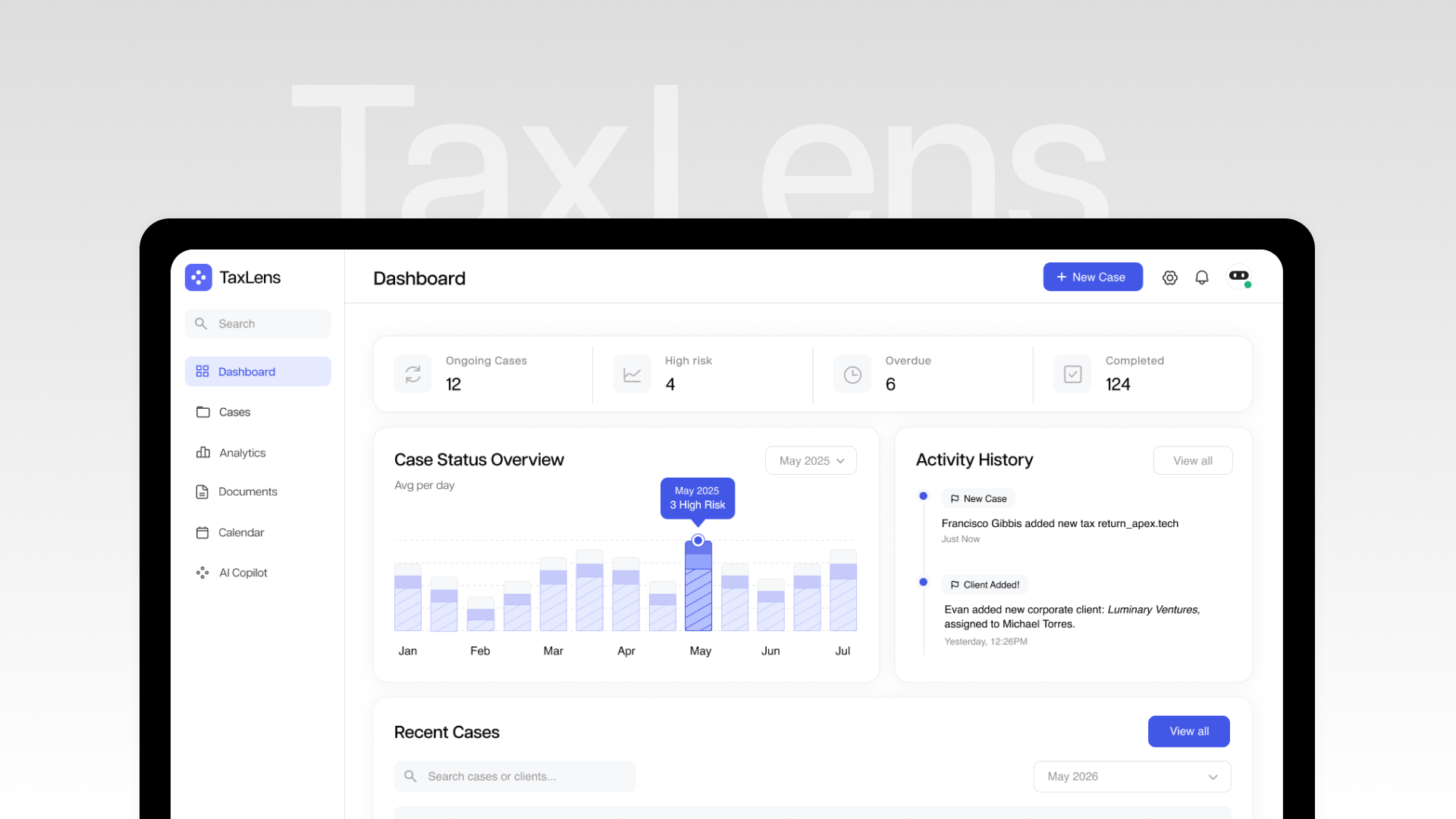
An AI-powered platform that structures tax workflows, improves communication, and streamlines compliance across clients and accountants.
[ Overview ]
Design Process
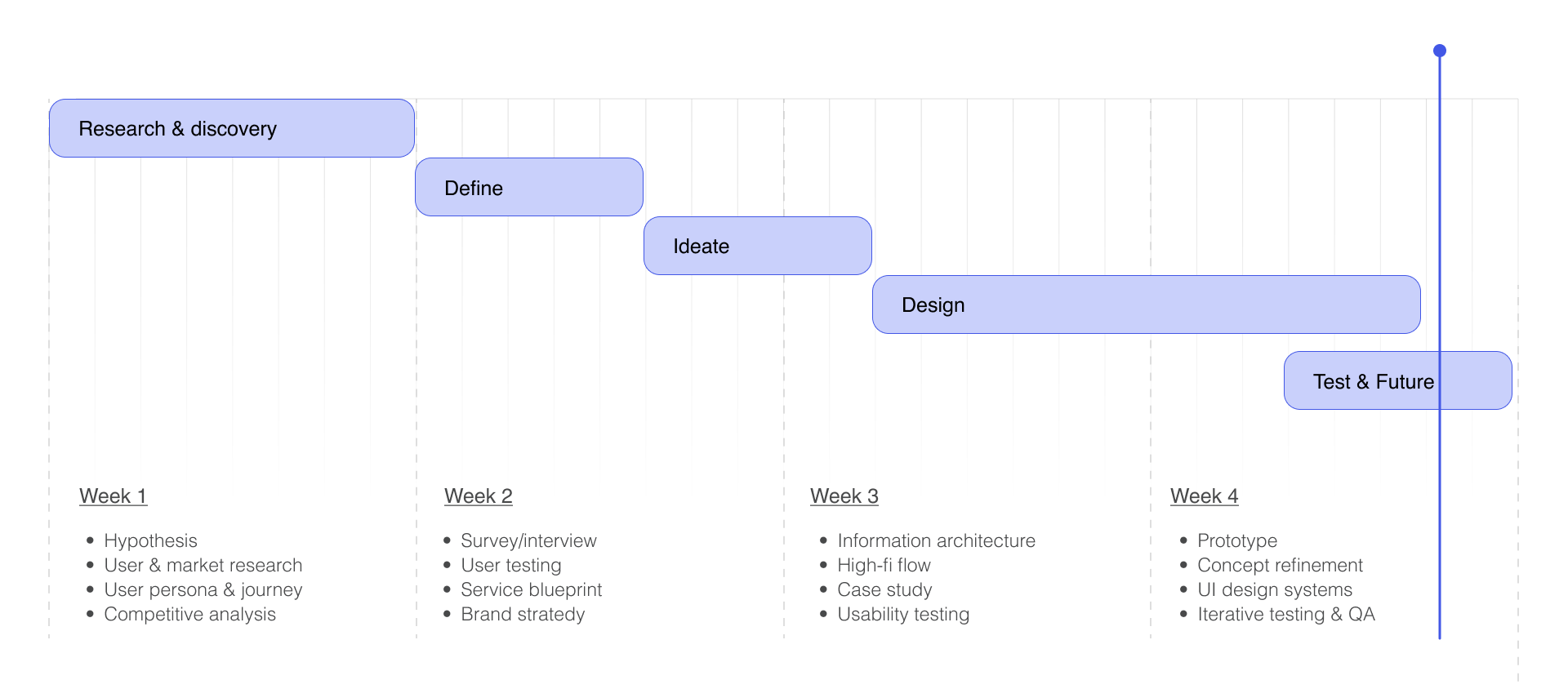
The process followed a structured workflow from research and problem definition to designing AI-driven solutions, prototyping, and iterative validation.
[ Problems ]
Discovery: What did I find?
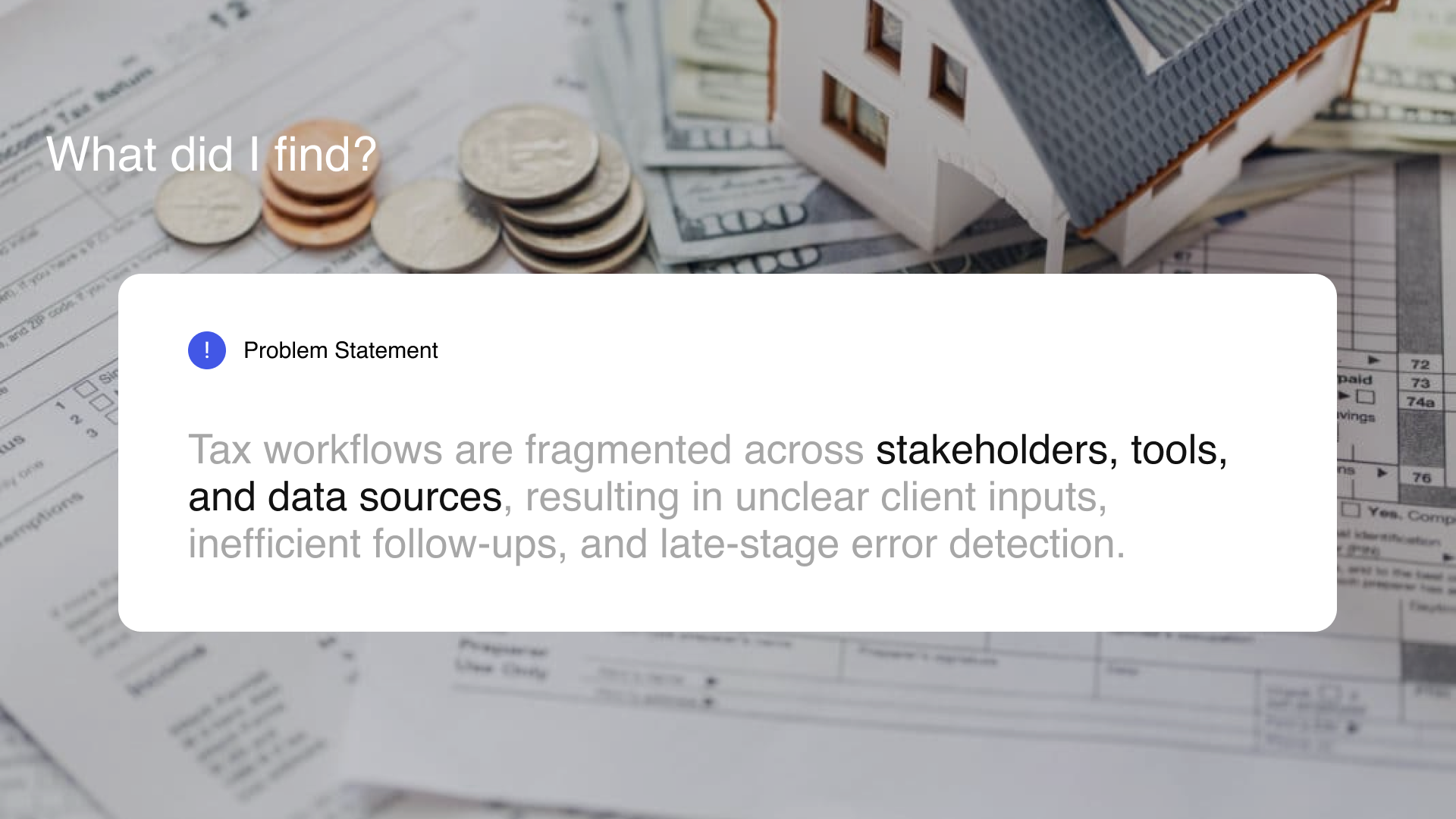
Tax workflows rely on multiple stakeholders operating across disconnected systems and fragmented data sources, resulting in inefficiencies, frequent miscommunication, and increased risk throughout the filing process.
[ Research ]
Research Insights
Fragmented communication and inconsistent validation create delays across client, accountant, and compliance workflows.
[ Research ]
Stakeholders + Why AI
These fragmented workflow of users disconnects lead to follow-ups, inefficiencies, and increased risk throughout the filing process. In order to cater the problem, TaxLens introduces an AI layer that structures inputs, surfaces inconsistencies early, and connects stakeholders, transforming reactive workflows into more proactive and transparent systems.
Competitor Research
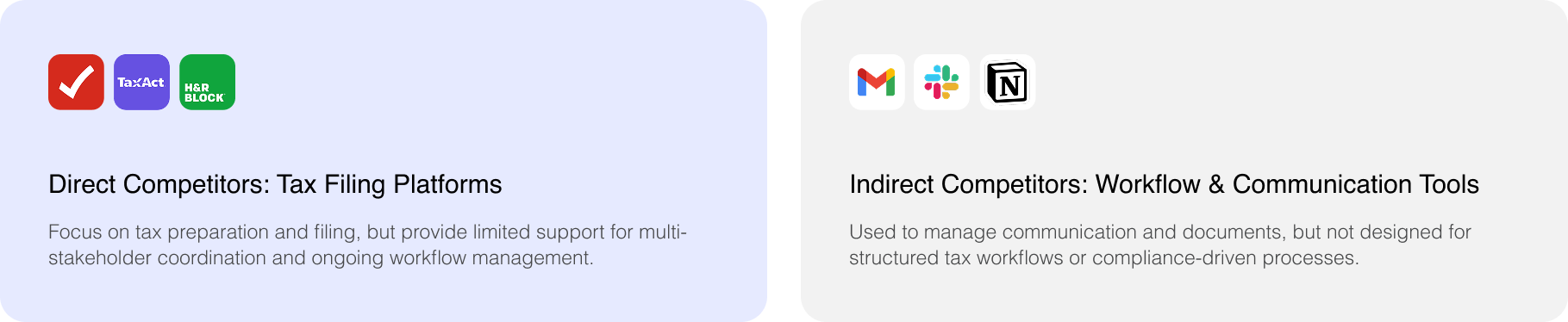
Existing tools tend to focus on either tax filing or communication, but rarely support both in a connected way. Tax platforms streamline submission but lack coordination across stakeholders, while communication tools are not designed for structured, compliance-driven workflows. This fragmentation creates inefficiencies and highlights the need for a more integrated, AI-driven system.
Service Blueprint
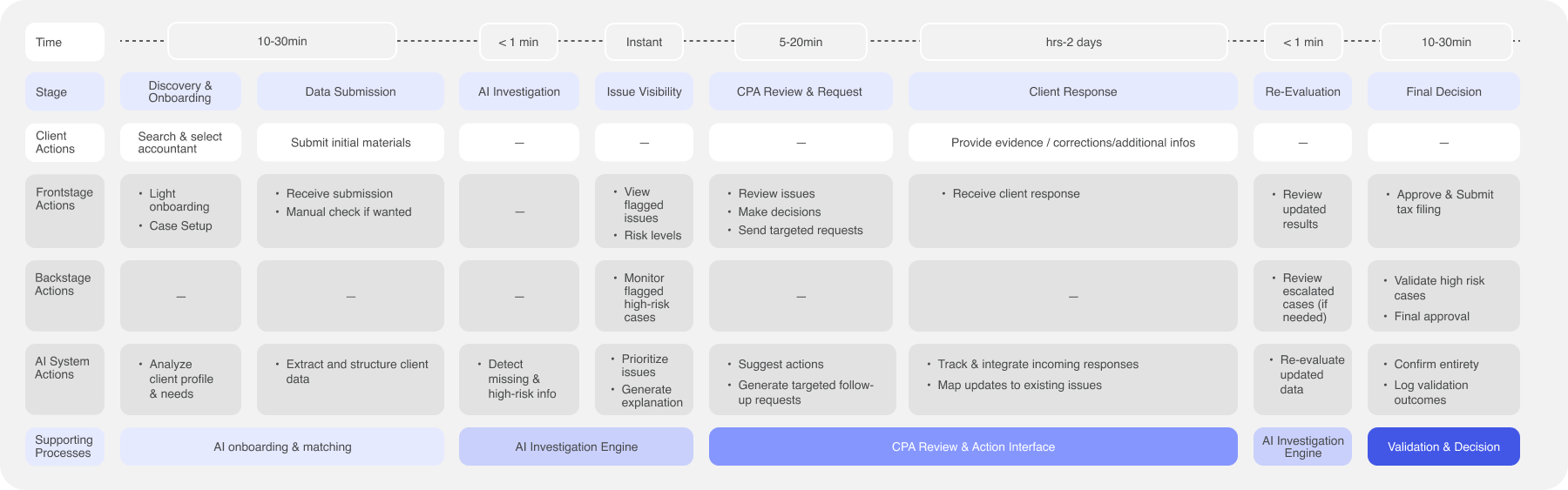
The service blueprint is built around a continuous investigation loop between AI, accountants, clients, and specialists, enabling early issue detection, structured follow-ups, and faster resolution across the workflow.
[ Solutions ]
Key Features
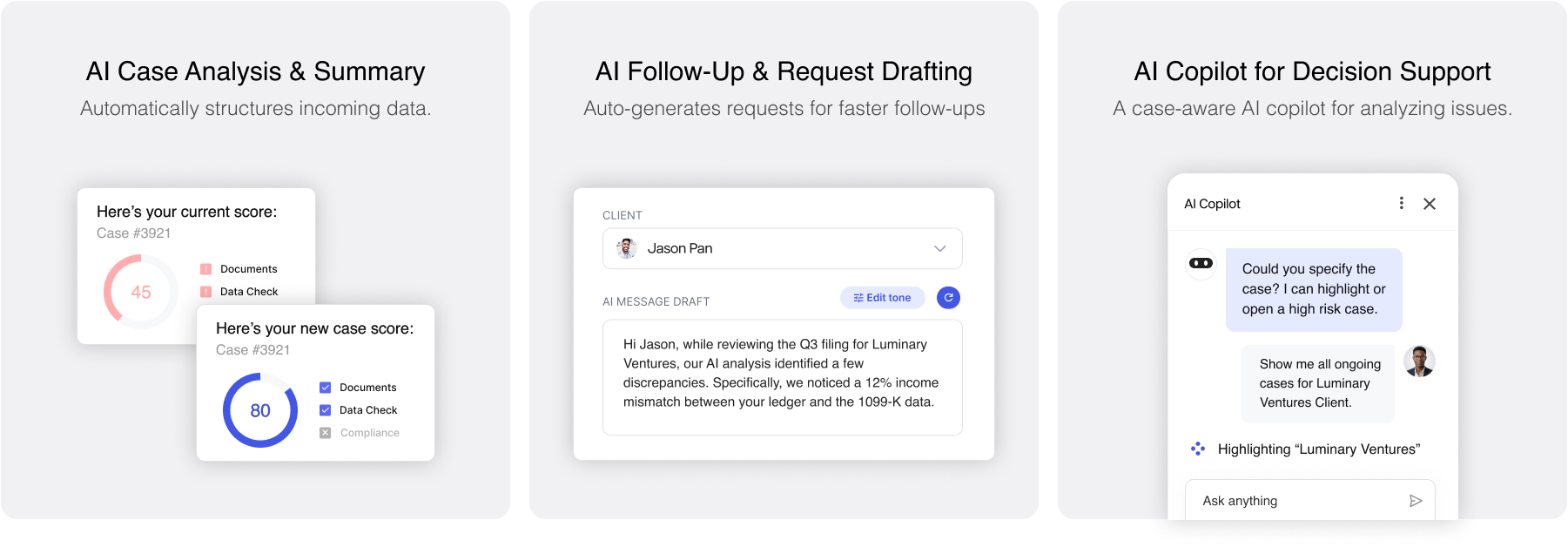
Key AI capabilities that make tax workflows more structured, proactive, and efficient.
[ Outcome ]
Basic Client Onboarding
An AI-assisted onboarding flow that helps client inputs, clarifies requirements, and matches users with the right accountant to reduce confusion & follow-up.
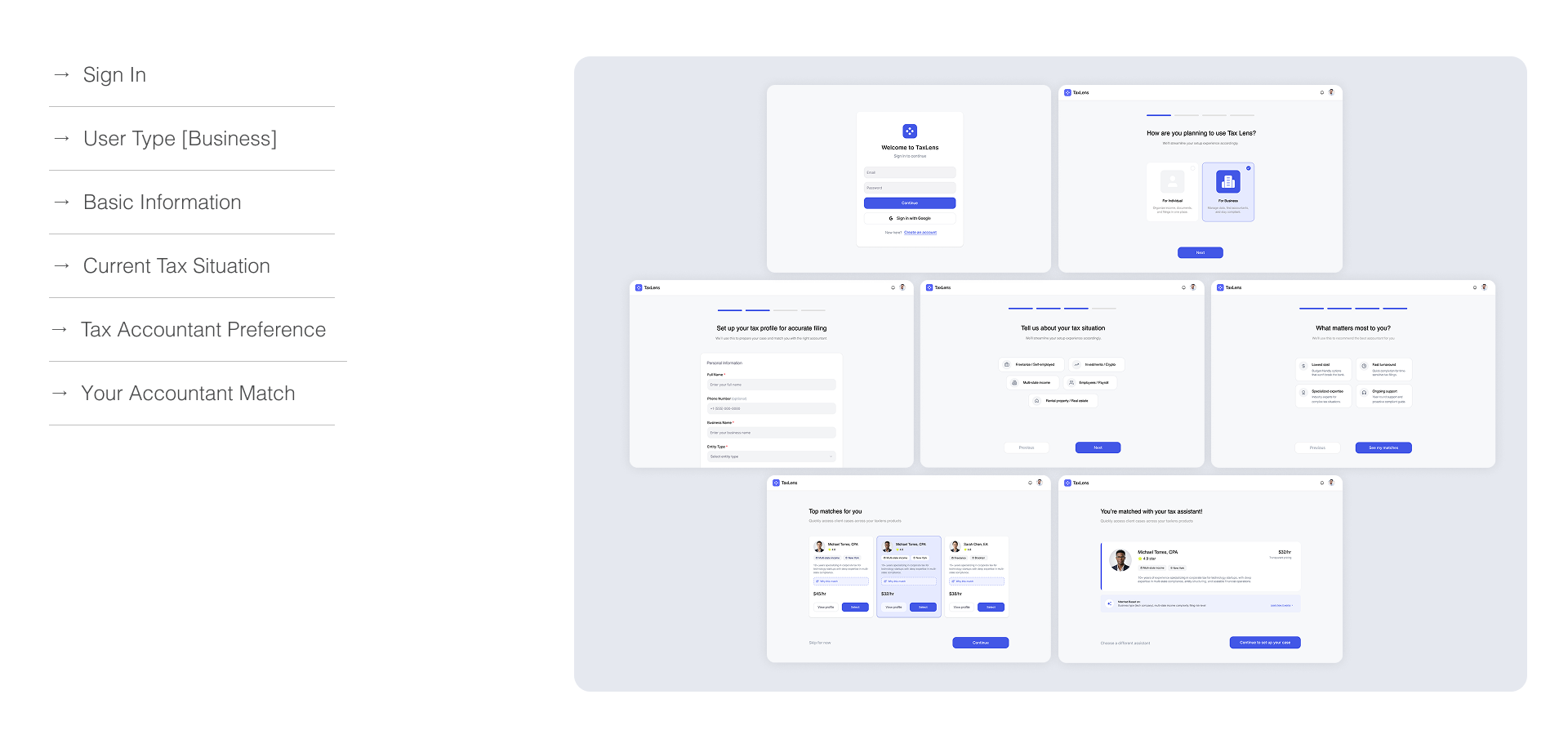
Flow 1: Corporate client sets up a new tax case
Clients set up a new tax case by entering key details and submitting financial data. The system then structures the case and assigns it to a matched accountant, where it appears as a new case ready for review.
Flow 1-2: CPA receives a new corporate case and begins follow-up.
The accountant receives a new case, reviews AI-flagged risks and missing information, and quickly initiates structured follow-ups to move the case forward.
Flow 2: CPA uses AI Copilot to streamline tax workflows
AI Copilot surfaces key insights, identifies risks, and guides next actions to streamline tax review and decision-making.
[ Reflection ]
Future & Takeaways
Key reflections and future directions focused on improving scalability, usability, and trust in AI-assisted tax workflows. Through this project, I learned that designing for multi-stakeholder systems requires not just optimizing individual tasks, but carefully structuring how information flows between clients, accountants, and AI. If given more time, I would further validate edge cases with real users, refine error handling and fallback scenarios, and explore more proactive AI guidance, ensuring the system not only reduces friction, but also builds long-term confidence in human–AI collaboration.
