SANIX · PRODUCT 2026
Sanix AI/AR Glasses
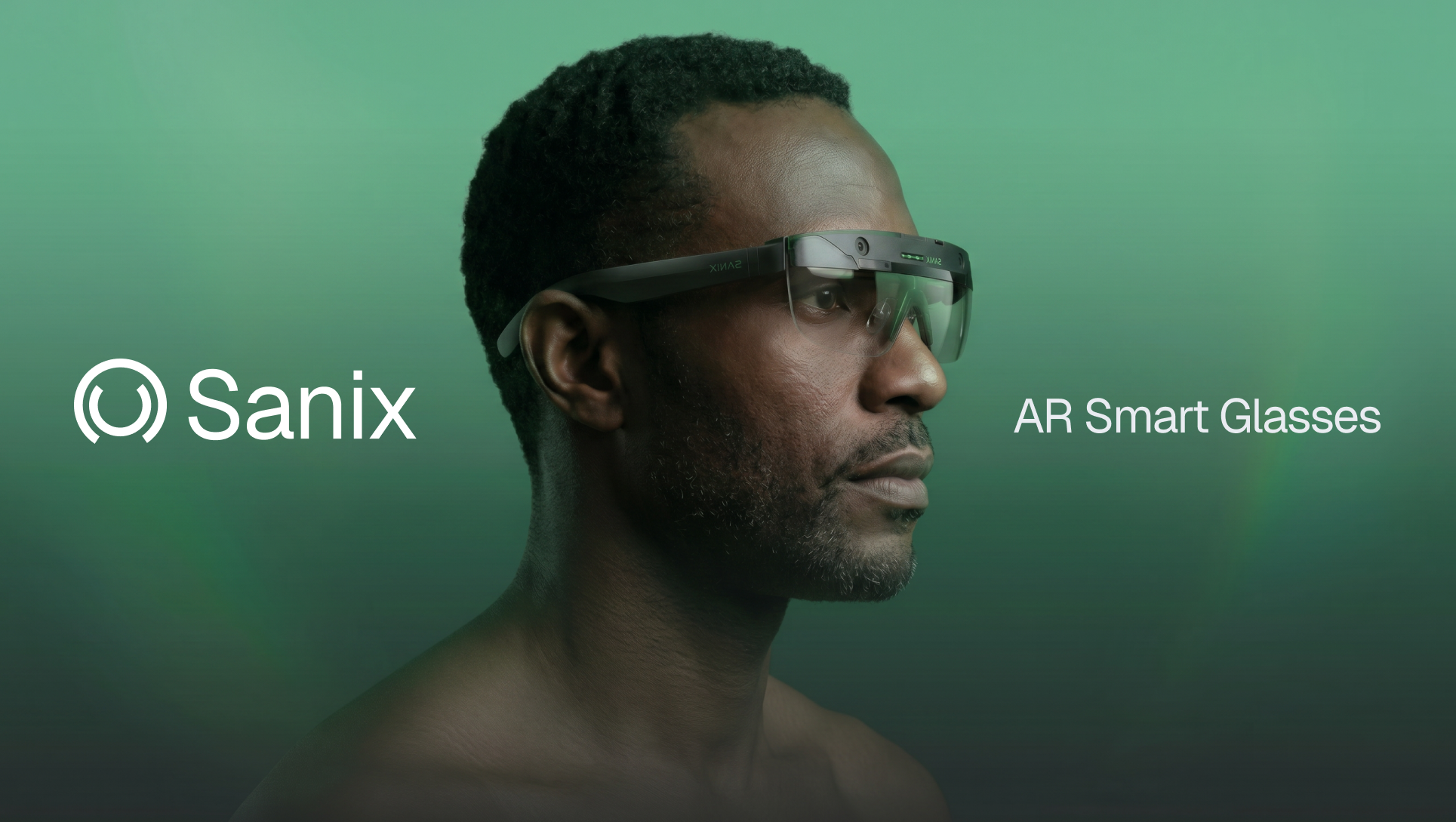
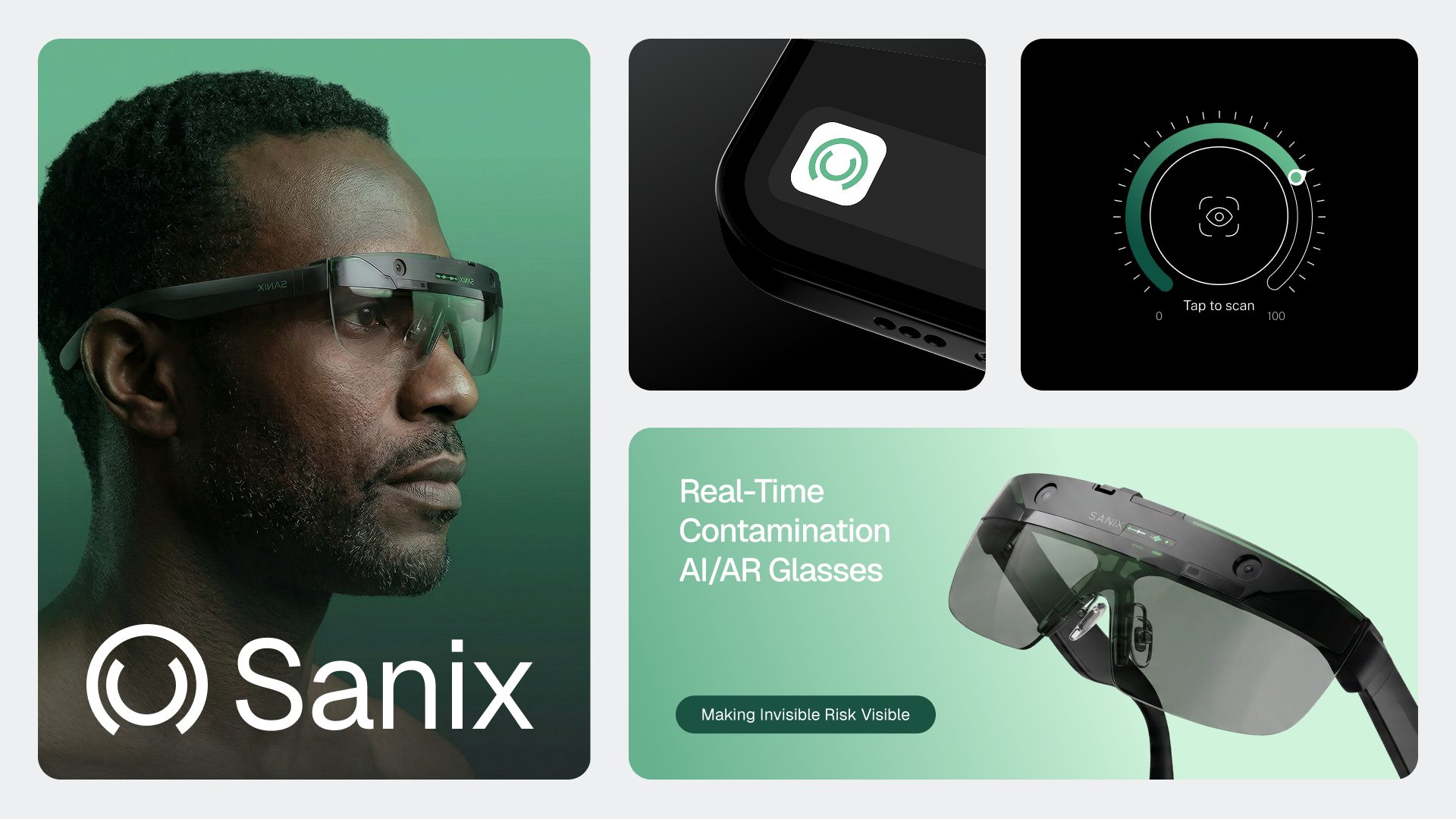
Helps hospital and lab workers detect contamination risk in real time and provides spatial AR/AI guidance to support safer, faster, and more reliable cleaning.
[ Overview ]
The Problem
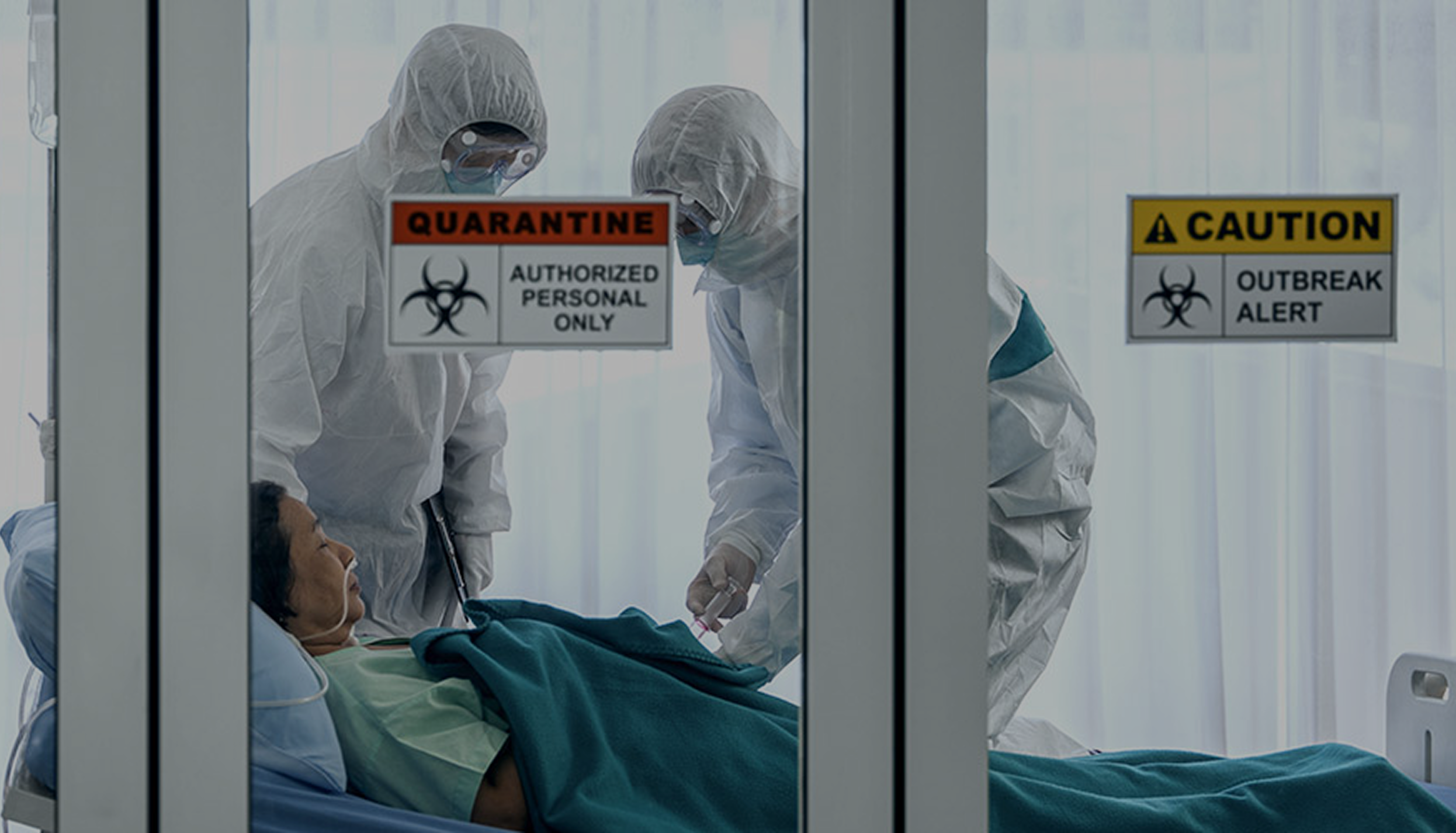
Frontline sanitation teams at hospital and labs, such as CVS workers, struggle to detect contamination risk during cleaning workflows, causing preventable exposure risks and delayed validation of cleaning quality.
Over 90% of contamination risk cannot be detected thru visual inspection alone
90%1 in 31 patients acquires a healthcare-associated infection during care
1 in 31
[ Research ]
Background Research
Through background research, we uncovered critical gaps in hospital cleaning workflows—where time constraints, partial verification, and rapid recontamination limit real effectiveness.
Hospital workers report time pressure as a major barrier to thorough cleaning.
Cleaning verification depends on sampling, not full environmental validation.
High-touch surfaces can be re-contaminated within minutes of cleaning.
User Research
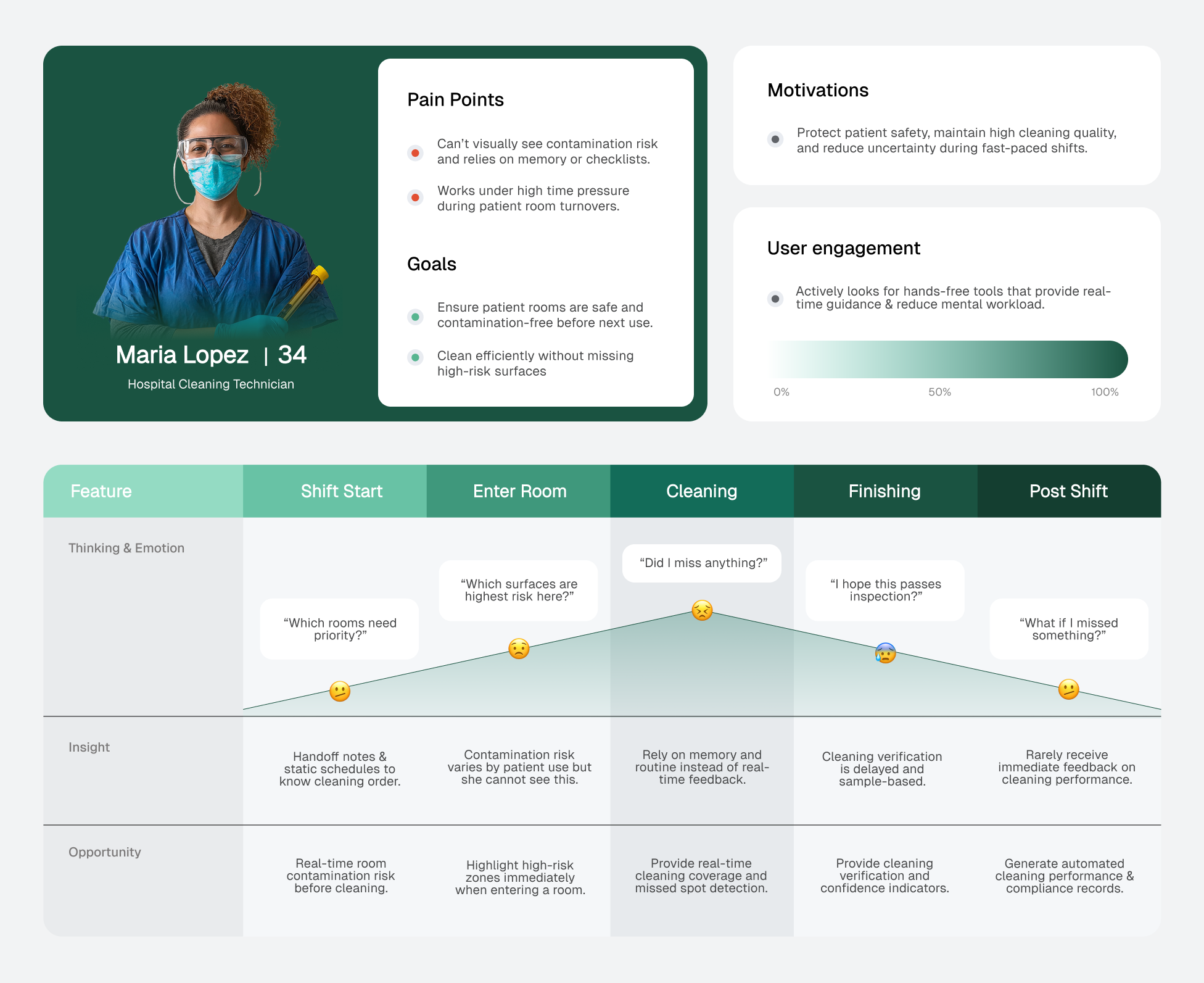
User research revealed that the cleaning stage creates the highest cognitive and emotional load, as frontline workers operate without real-time visibility into contamination risk.
Competitor Analysis
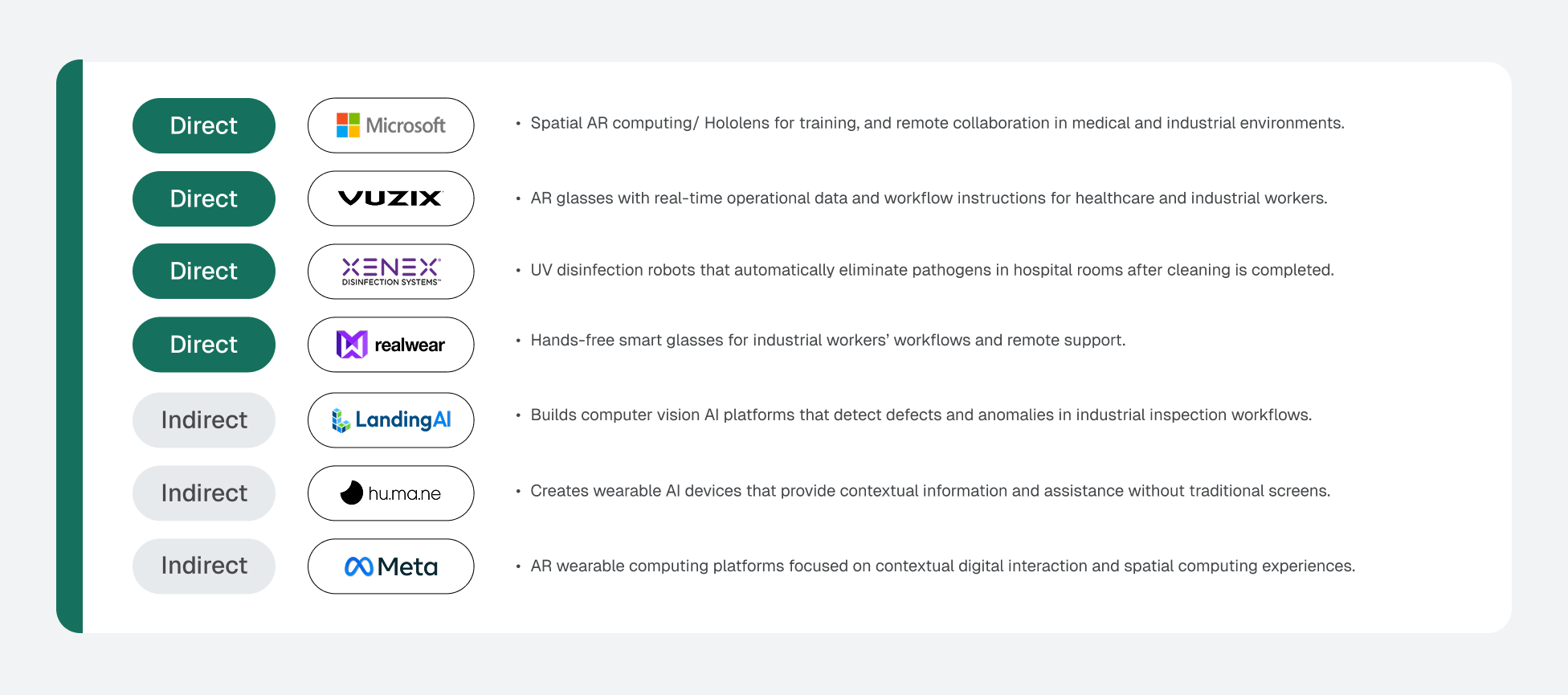
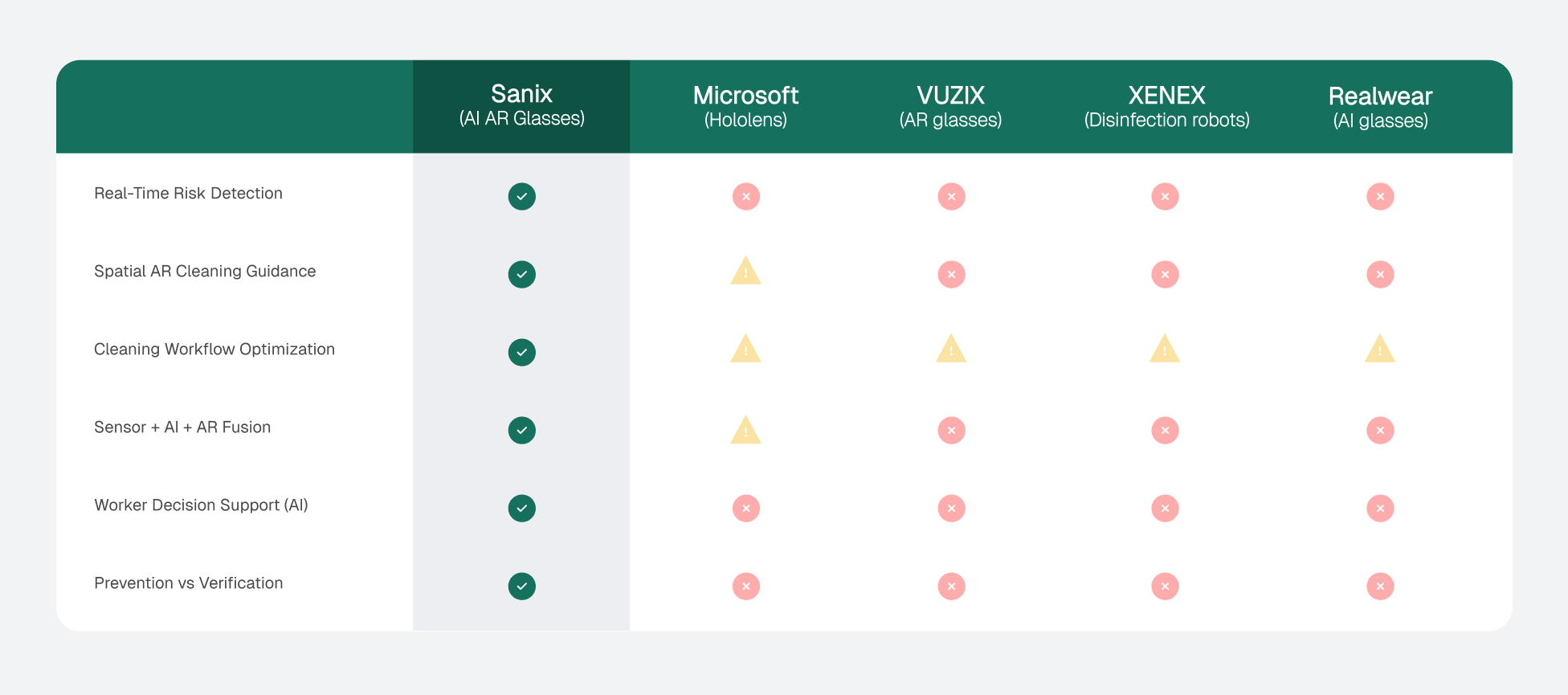
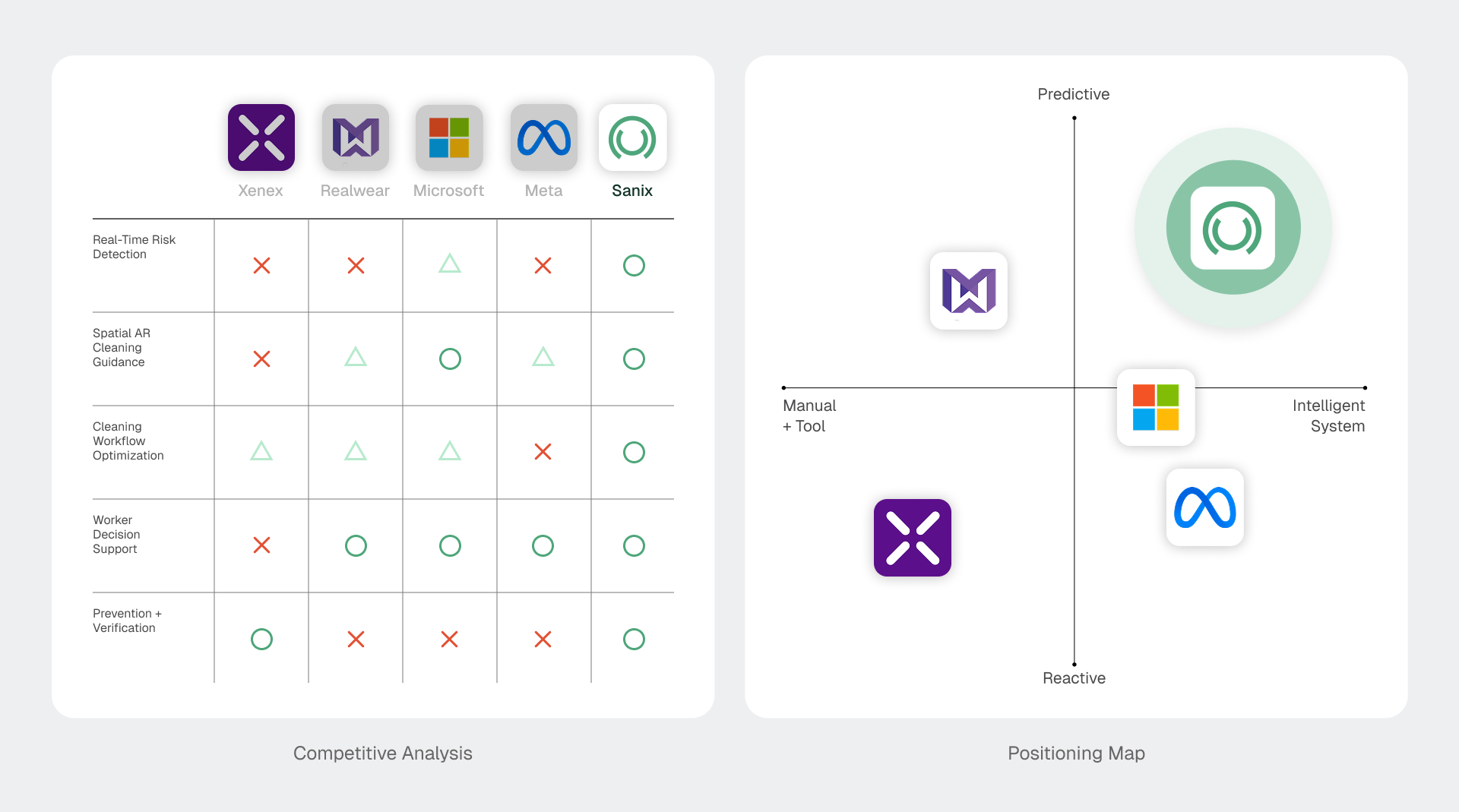
There is a clear gap that existing solutions operate in silos, addressing either contamination detection or cleaning workflows, but none integrate both into a cohesive, real-time system like Sanix.
[ Solutions ]
Key Features
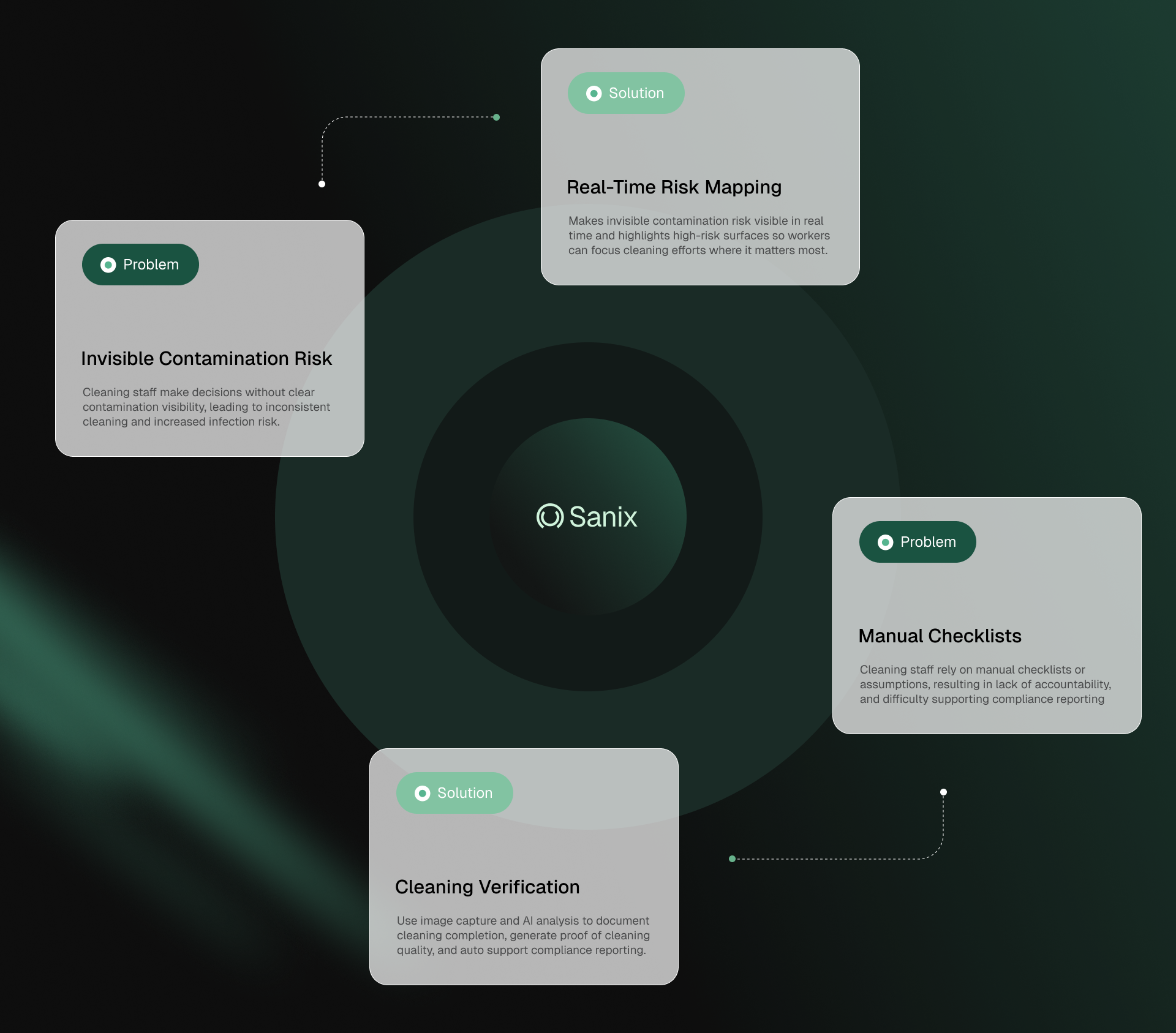
We transformed cleaning from a reactive into a proactive, intelligence system. By combining real-time risk detection and adaptive cleaning guidance, the platform helps workers identify, prioritize, and verify sanitation tasks with greater precision and confidence.
Information Architecture
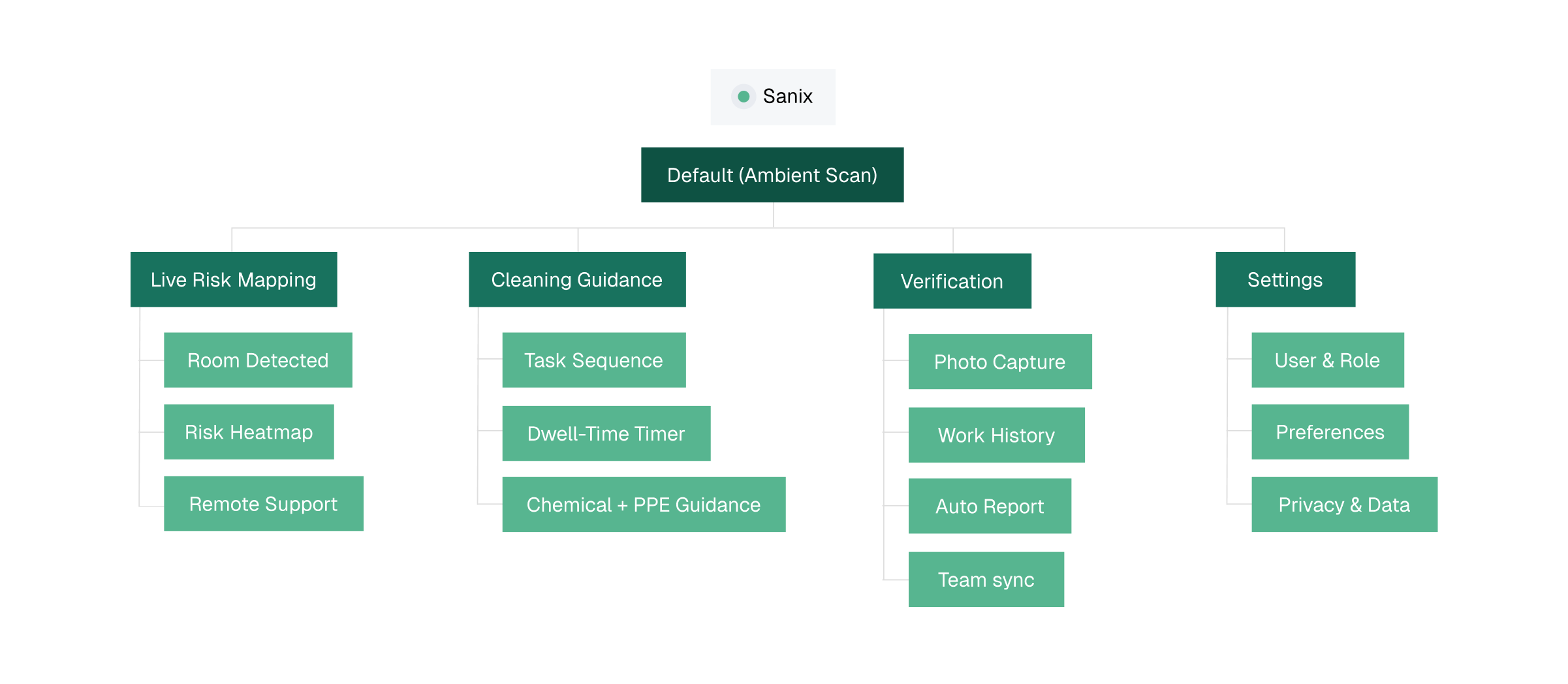
Sanix is designed around an ambient scan as the default state, passively capturing environmental data without requiring user input. This allows workers to stay focused on their tasks while the system continuously detects room context and contamination risk in the background.
UI Design
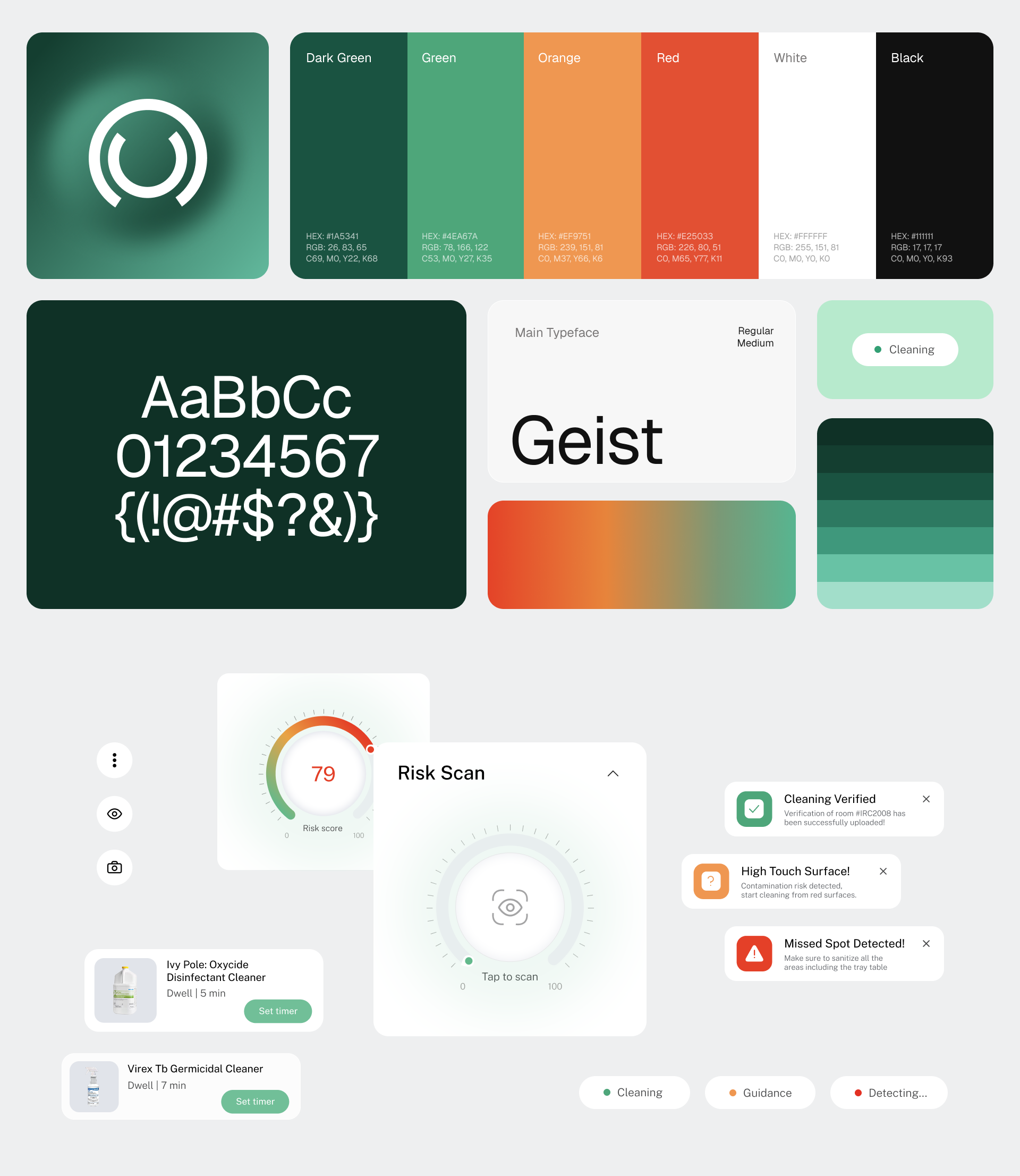
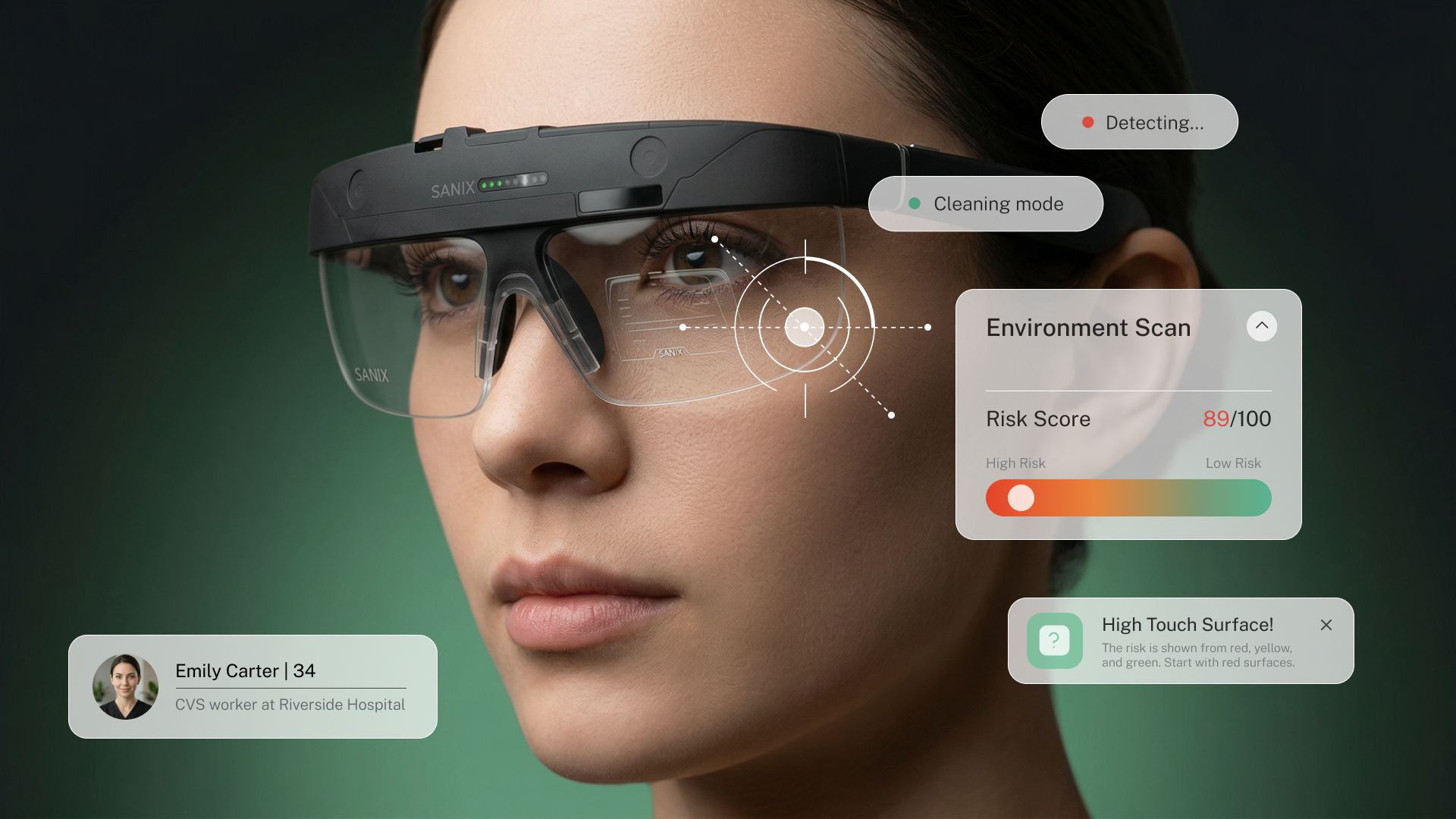
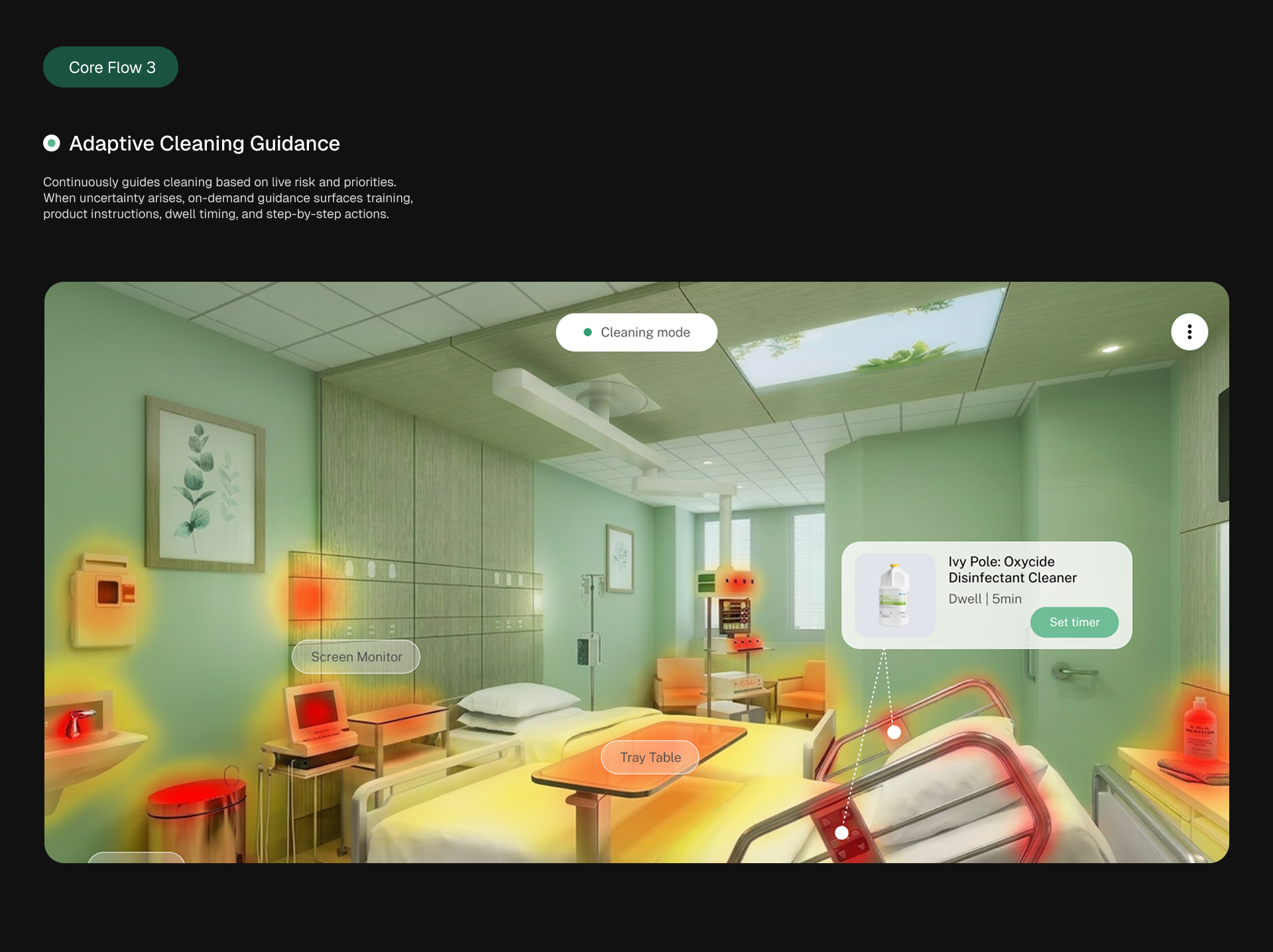
Powered by AR smart glasses, Sanix turns cleaning into a real-time, guided workflow, minimizing delays and helping workers act with precision. It surfaces what matters most and supports each step to ensure reliable, high-quality sanitation.
[ Outcome ]
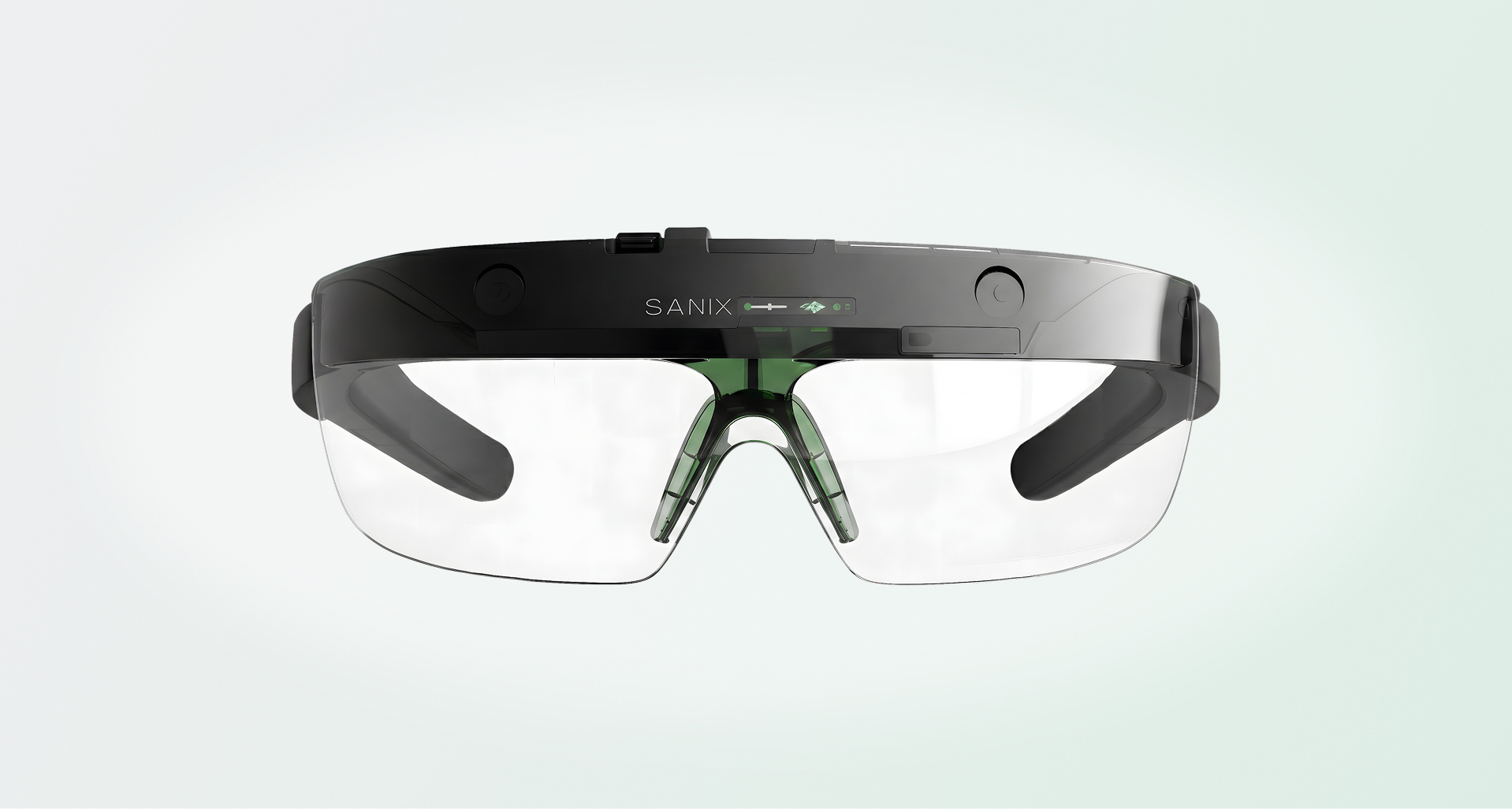
AR Smart Glasses: Product Design & Features
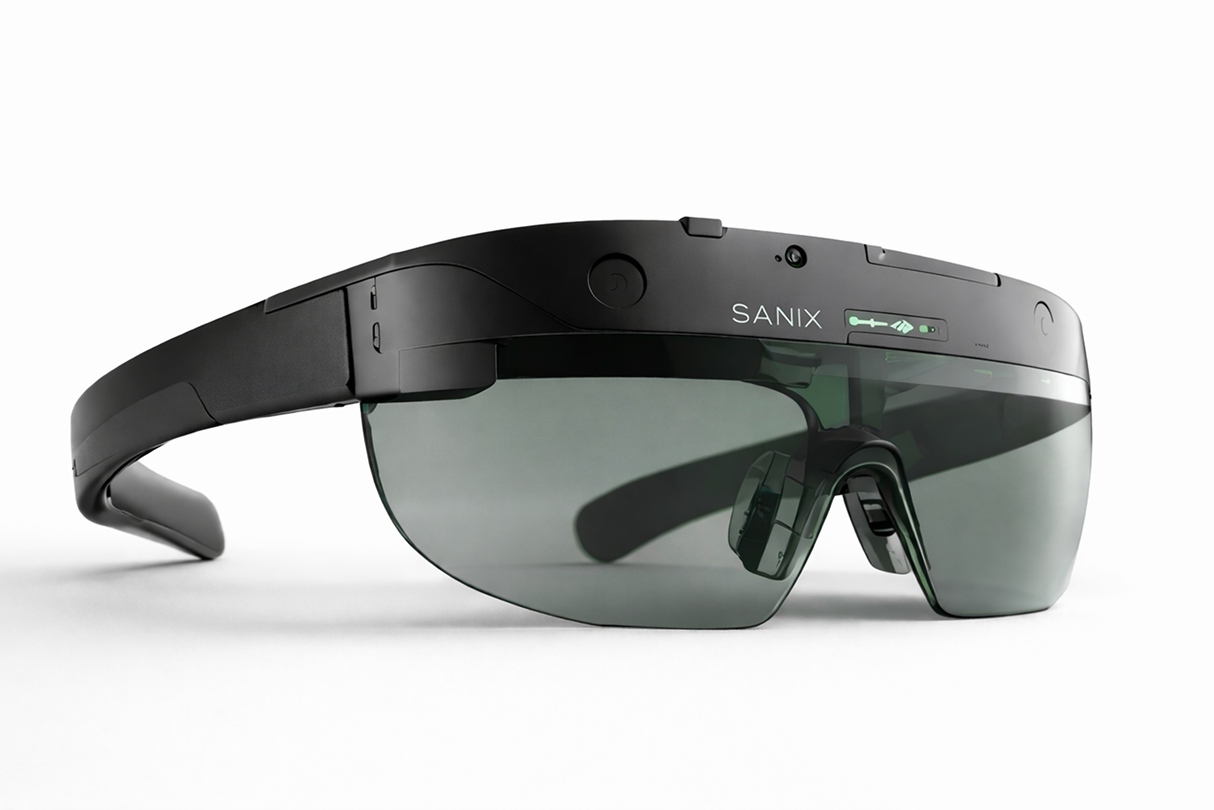
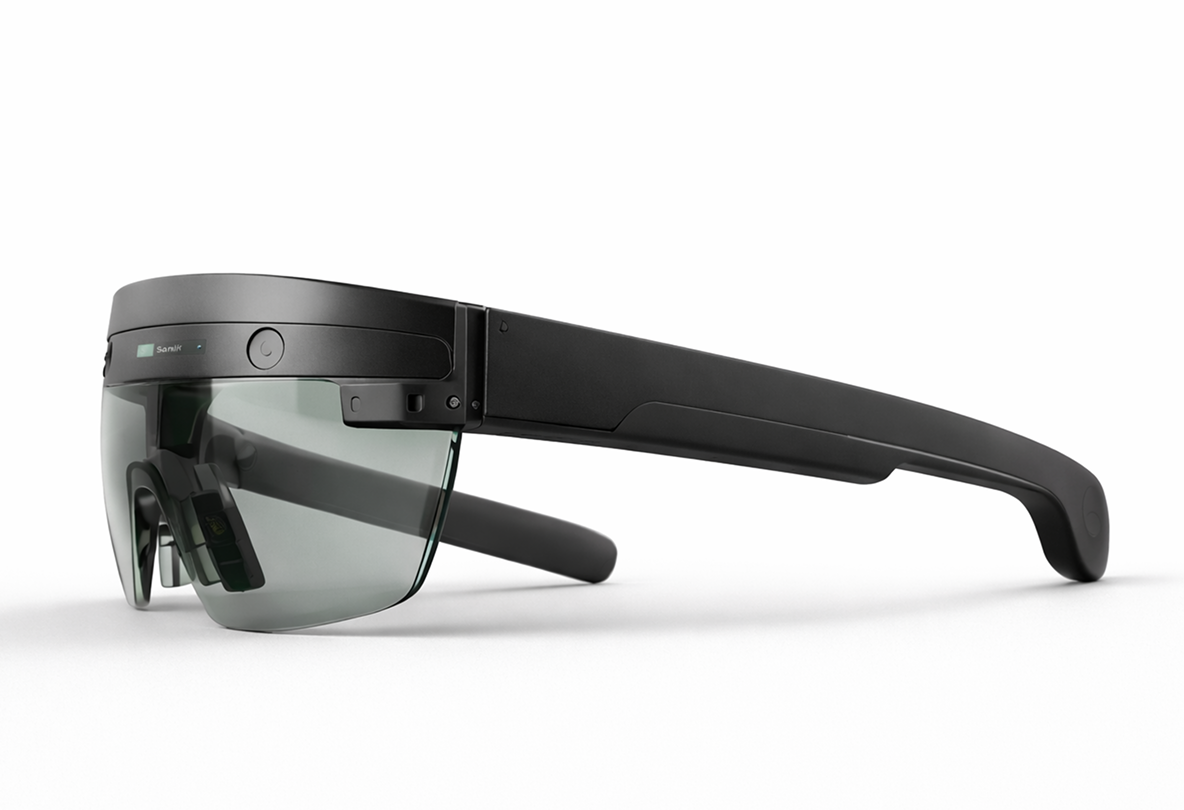
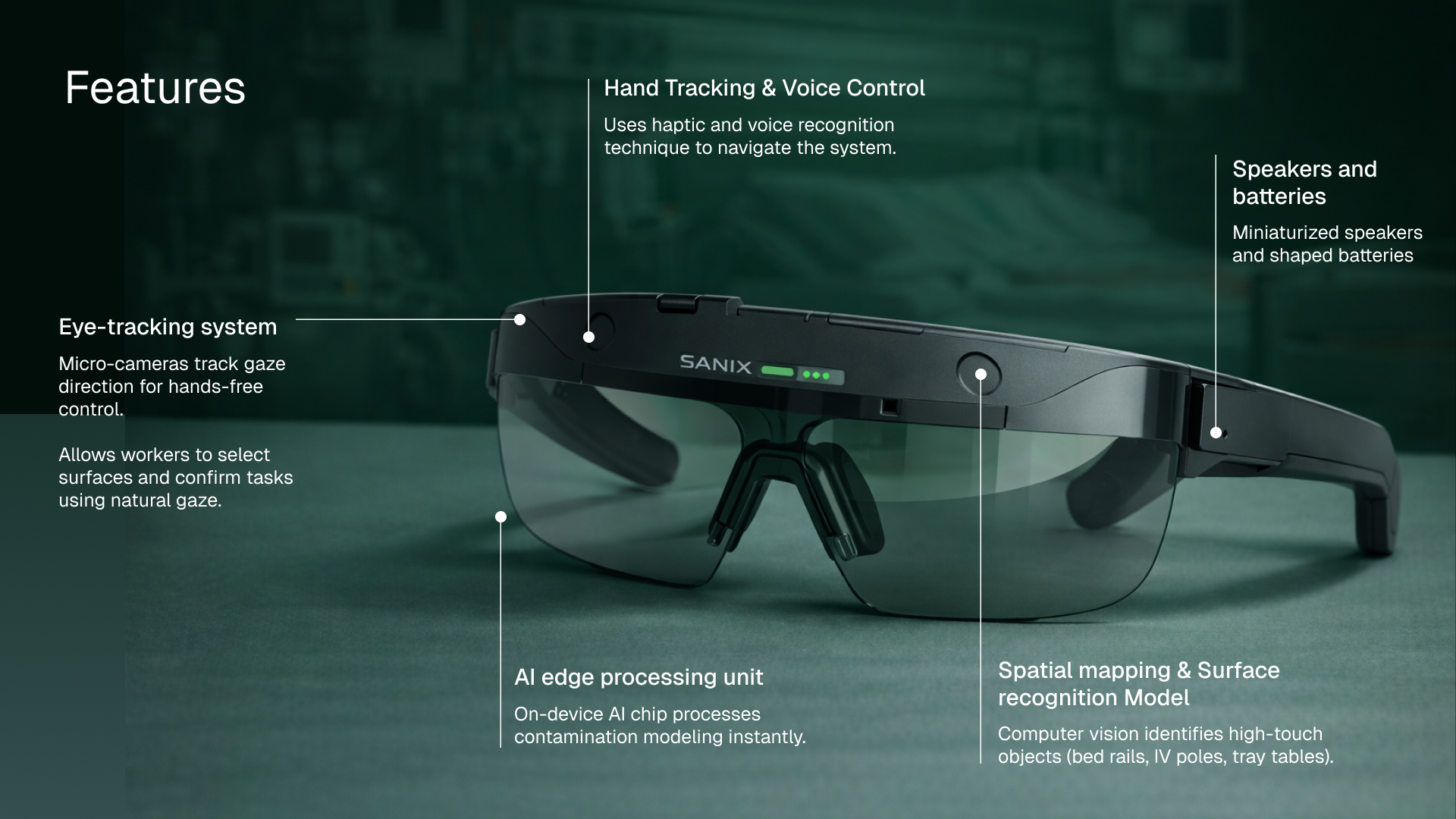
Powered by AR smart glasses, Sanix turns cleaning into a real-time, guided workflow, minimizing delays and helping workers act with precision. It surfaces what matters most and supports each step to ensure reliable, high-quality sanitation.
AR Smart Glasses: Core Workflows
Powered by AR smart glasses, Sanix turns cleaning into a real-time, guided workflow, minimizing delays and helping workers act with precision. It surfaces what matters most and supports each step to ensure reliable, high-quality sanitation.
[ Reflection ]
Key Takeaways
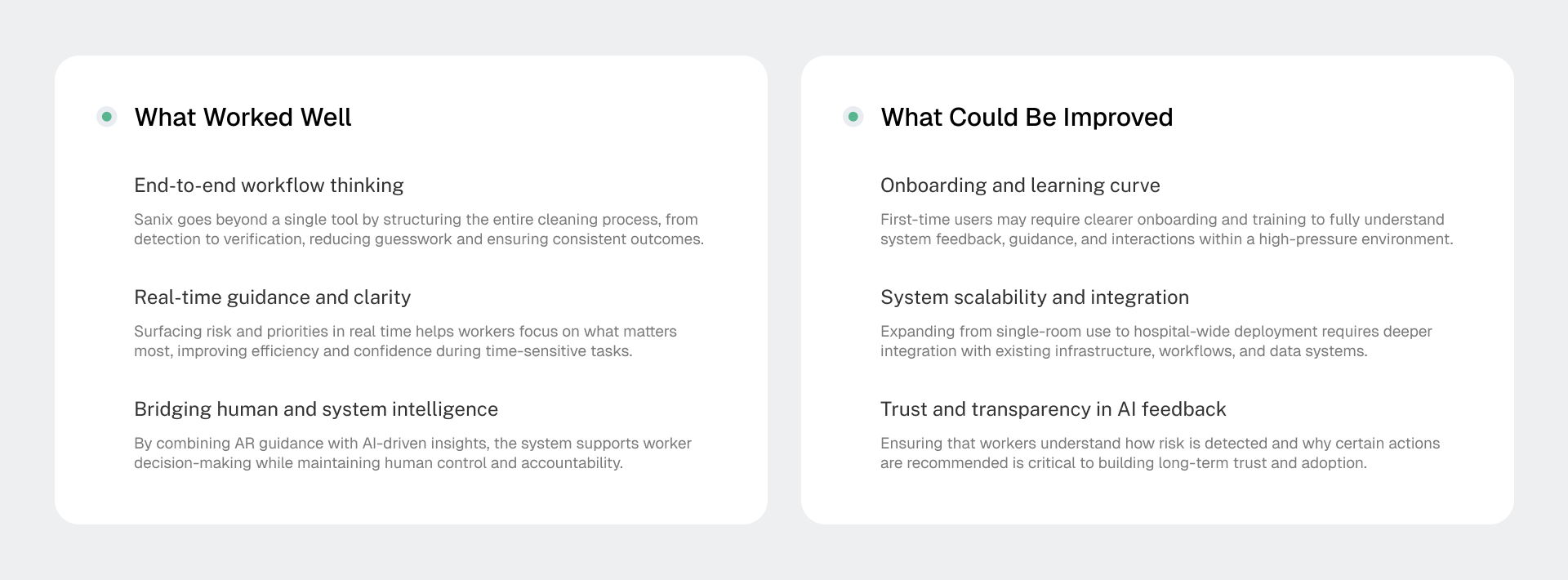
Insights from designing Sanix AR glasses experience, highlighting what worked, what can be improved, and how the system can evolve into a scalable, intelligence-driven sanitation platform in the future.
If I Had More Time...
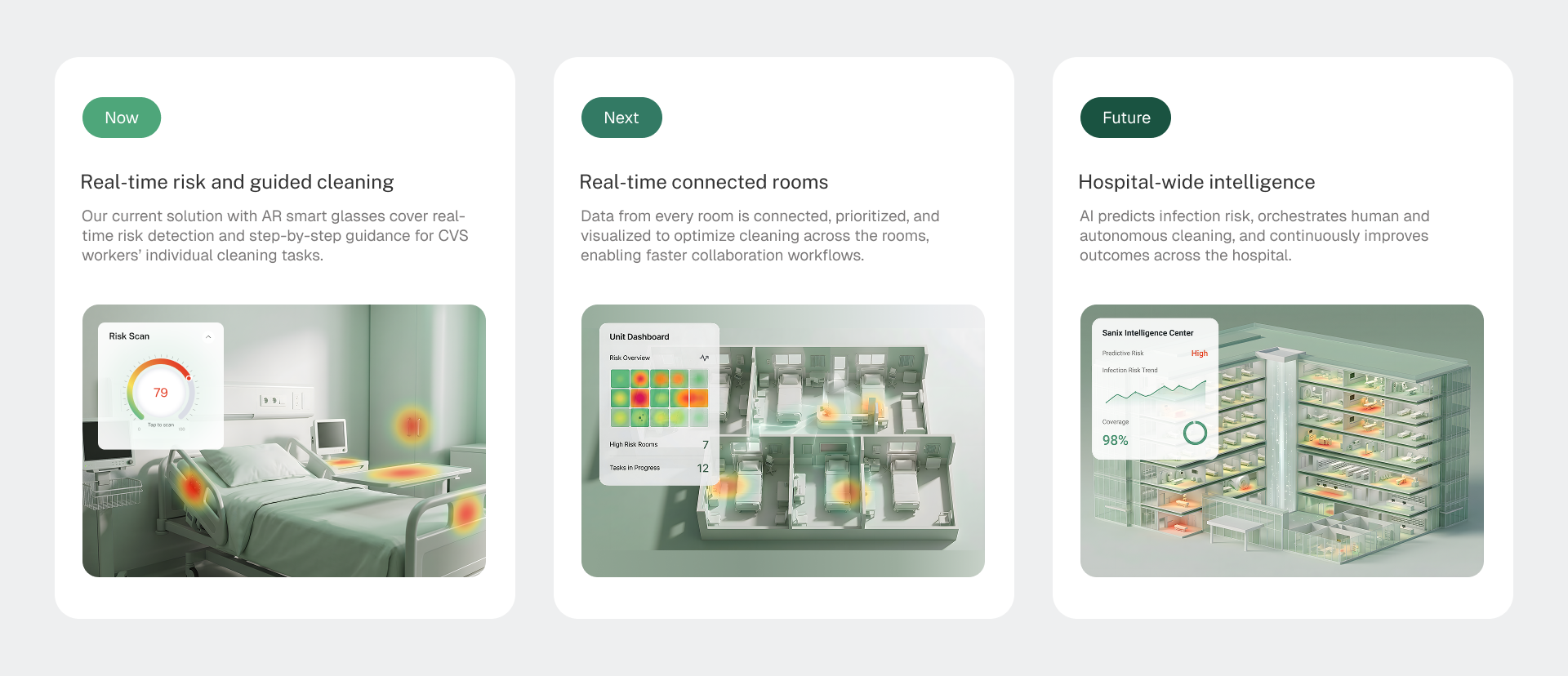
With further development, Sanix could extend beyond smart glasses into an intelligent sanitation infrastructure, combining predictive infection intelligence, hospital-wide risk analytics, and a human–autonomous cleaning ecosystem to enable proactive, system-level infection prevention.